

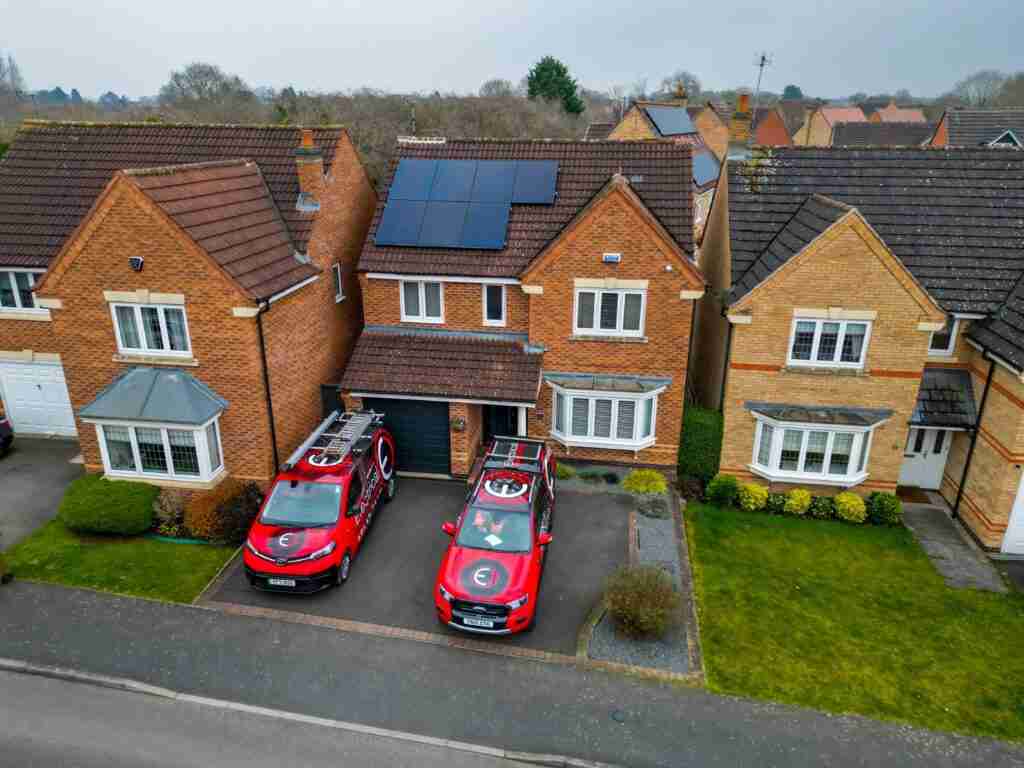
Most current domestic solar panels occupy around two square metres each. However, there’s a bit more to it than that.
Two roofs of a similar size may hold a different number of solar panels. That’s because the usable space might be different thanks to obstructions, roof shape and shading.
At Electrical Innovations, we design and install domestic solar systems across Derby and the surrounding areas. Here’s how to make an initial estimate and what we’ll check before recommending a system.
How much roof space do solar panels need?
Most domestic solar panels measure about 1.7m to 1.8m long and 1.1m to 1.15m wide. That’s why we suggest allowing around 2m² per panel. You can use that figure for a very rough calculation of how much area a solar array might cover:
6 panels: 12m²
10 panels: 20m²
12 panels: 24m²
16 panels: 32m²
These figures show the combined footprint of the panels, not the total roof space you need. The system also needs a workable layout, gaps between panels and suitable fixing positions. Panel dimensions vary, so your installer will base the calculation on the model included in your design.
You may see a system described in kilowatt peak, or kWp. This is the combined rated output of its panels under test conditions. For example, ten 400-watt panels create a 4kWp array. Higher-output panels may provide the same capacity with fewer units, depending on their dimensions.
For context, an average 4.5kWp home solar system uses around 12 panels and requires roughly 20m² to 30m² of roof space.
Why is usable roof space smaller than the total area?
Your roof is unlikely to offer one empty rectangle. Chimneys, roof windows, vents and dormers can break it into smaller sections. Valleys and hips can also leave areas where a rectangular panel won’t fit.
The mounting system needs secure fixing points and the layout must suit the roof structure and the manufacturer’s requirements. Access, drainage and wind also affect how close the array can sit to roof edges and obstacles.
You’ll also need to think about shade. Trees, chimneys and nearby buildings may mean some parts of your roof aren’t the best place for panels. Your installer will look at how shade affects the roof and see whether a different layout could help you generate more electricity.
By all means, measure your roof for a broad estimate. That’s useful information for us when you first reach out. However, don’t plan to cover every square metre.
Can solar panels go on more than one roof section?
Yes. If one slope can’t hold the full array, you may be able to divide it between two suitable roof faces. An east-west arrangement can spread generation across the morning and afternoon. A garage or extension may provide another option if its roof and electrical connection are suitable.
Flat roofs can support solar panels, but the frames and spacing required to reduce shading between rows may make the array use more space than the panels’ footprint suggests.
In most cases, you won’t need planning permission for solar panels because they’re covered by permitted development rights. If your home is listed or in a designated area, though, extra restrictions may apply.
How is the right solar panel system size calculated?
Your roof space affects how many panels you can fit, but that doesn’t mean you should install as many as possible. We’ll look at how much electricity you use to work out the right system size for your home. A good residential solar system design should also consider when you use that electricity and whether an electric car, heat pump or other change could increase demand.
We’ll also check your roof’s condition and consider the factors mentioned above alongside the type of panel we recommend. This helps us decide where each panel should go and estimate how much electricity your system could generate.
It’s worth considering your plans now. You can sometimes add panels to an existing solar set-up, but the inverter, electrical design and grid connection must be able to accommodate them.
What if you don’t have enough roof space for solar panels?
A smaller roof doesn’t automatically rule out solar. More efficient panels may generate more electricity per square metre. Even a small array can reduce the electricity you buy from the grid if its output matches part of your daytime use.
The key is to judge the system by its expected generation and how much of that electricity you’re likely to use.
At Electrical Innovations, we begin with a survey before preparing a detailed system design, generation estimate and savings calculation. If you want to know the best panel setup for your home, rather than just what your roof can hold, contact us to discuss your home solar installation.


