

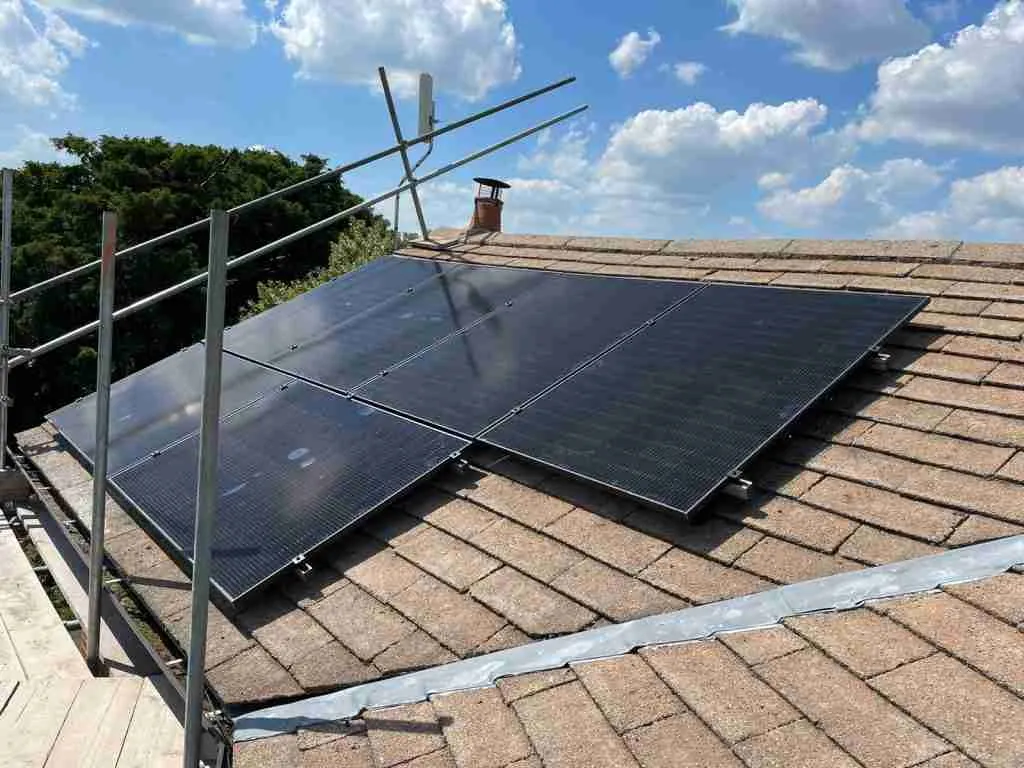
A solar system on a shaded roof can still generate enough electricity to make the installation worthwhile. However, there are several steps you can take to optimise your system around the shade.
Shade reduces the light that reaches your panels. It can also create differences between the output of connected panels, causing further losses across the system.
You can’t recover sunlight that doesn’t reach the roof. Nevertheless, here are some things you can do.
Can you reduce the shade?
First of all, check whether you can remove or reduce the cause of the shade. You may be able to trim trees or shrubs on your land.
If a neighbour’s tree causes the problem and you have a good relationship with them, chat with them before you design your solar system. They may agree to have it trimmed or let you contribute towards the work. Use a qualified tree surgeon and agree who’ll arrange and pay for it.
Don’t arrange work beyond your boundary or on a neighbour’s land without permission. Before pruning or removing a tree, check with your local council or planning authority for Tree Preservation Orders, conservation area controls and other restrictions.
Ask your installer whether an unused aerial, satellite dish or other redundant obstruction can be moved. A roofer or relevant tradesperson should assess any changes to chimneys, vents or roof structures. Don’t climb onto the roof or alter electrical equipment yourself.
Assess how the shade moves
The sun changes position throughout the day and the year. For example, a chimney may shade one panel in the morning and a different panel later. As a tree grows or produces leaves throughout the seasons and the years, it may cast more or less shade at different times.
As such, your installer should assess:
What causes the shade
Which parts of the roof it covers
When it reaches each part
How the pattern changes with the seasons
How much annual generation you’re likely to lose
For an MCS installation, you should receive an annual generation estimate that accounts for shade and a proposed panel layout. Where the MCS method produces a shade factor below 1.0, you should also receive a sun path diagram. Of course, treat the generation figure as an estimate rather than a promise.
Use the least-shaded parts of your property
Don’t assume every panel must face south or sit on the main roof. An unshaded east- or west-facing roof can generate more than a south-facing roof that spends much of the day in shade.
Your installer may recommend leaving the worst-affected part of the roof empty, moving panels away from a chimney, dormer or tree, splitting panels between two or more roof slopes, using a garage or outbuilding, or even installing panels on the ground (if the rules allow).
High-efficiency panels can fit more generating capacity into the roof area that receives the most light. A higher efficiency rating doesn’t always mean the panel will handle partial shade better.
Design the strings and inverter around the shade
Solar panels connect to each other in strings. When one panel in the string produces less current than the others, the difference reduces the string’s overall output. There are ways to limit the losses, such as bypass diodes and the inverter, but it all depends on how your installer designs the system.
Your installer can group panels with similar orientations and shade patterns. They can connect different groups to separate maximum power point tracking (MPPT) inputs. They must also choose string lengths that remain within the inverter’s operating range when shade affects part of the array.
Basically, the best panel, string and inverter arrangement depends on where and when the shadows fall.
Would optimisers or microinverters help?
They can, but they don’t solve every shading problem.
A microinverter converts each panel’s DC electricity into AC at or near the panel. A string-inverter system sends DC electricity from several connected panels to one central inverter.
Both technologies can reduce mismatch losses when some panels receive shade while the others sit in sunlight. They can also help on roofs with several orientations.
However, they can’t replace the light lost from a shaded panel. They also offer less benefit when the whole array receives the same shade. They add cost, conversion losses and more equipment to the system.
A well-designed string inverter system can sometimes generate as much as or more than a system with panel-level electronics under light or moderate shade. Ask your installer to compare the predicted annual output and cost of each option instead of assuming optimisers will produce the best result.
Choose panels that suit the shade pattern
Most panels divide their cells into sections protected by bypass diodes. If shade affects one section, electricity can bypass it while the other sections keep generating. Panels with more bypass-diode-protected sections should lose less output when a small shadow crosses them. Half-cut-cell panels can also limit some shading losses because their two halves can operate with some independence.
However, the result depends on the panel’s internal layout, its position and the direction of the shadow. A panel described as ‘half-cut’ or ‘shade tolerant’ won’t suit every roof. Your installer should compare the module design with the shade survey.
Keep the panels clear and monitor them
Leaves, bird fouling and other debris can block part or all of a panel. Rain will clean most pitched panels, but debris can collect near the frame or beneath trees. Arrange professional cleaning if you notice your panels generating less electricity without a clear shading reason.
There could also be a fault with the wiring, panels or control systems. A solar installer or maintenance company can help you stay on top of minor faults like these before they develop into something serious.
More panels don’t always offer better value
Adding panels to a shaded section may increase your total annual generation. However, each of those panels will produce less electricity and may take longer to recover its cost.
Compare each design’s estimated annual output, installation cost and expected savings.
If your roof has too much shade, another roof, an outbuilding or a ground-mounted array may offer a better option. In extreme cases, solar won’t make financial sense unless you can reduce the shade.
At Electrical Innovations, we’ll assess the shade, roof space and electrical installation before recommending a system. We’ll compare the options and show you how each design is expected to perform. Contact us today to arrange your solar assessment.


